
A fleet vehicle’s mileage is only part of the buying decision. When assessing fleet vehicles for sale, treat age and licensing criteria as specific to the sale and location; the vehicle category alone doesn’t establish buyer eligibility. In the United States, GSA offers more than 30,000 fleet vehicles for public sale at auction each year.
Price and odometer readings matter when comparing fleet vehicles for sale, but maintenance history and intended use also determine whether a vehicle suits your operation. This guide explains how to assess vehicle type, mileage, service records, pricing, and financing terms without assuming every sale works the same way.
You’ll learn what to review in a listing and how to compare vehicles with your operational requirements, so you can make a more informed decision before moving from browsing to purchase.
Key Takeaways
- Compare vehicle types against the job they need to perform, since fleet listings can range from passenger vehicles to specialist equipment.
- Assess mileage alongside service records and operating conditions to build a more useful picture of a vehicle’s history.
- Review financing terms and APR together, and understand how the purchase price and any additional terms are presented.
- In the United States, GSA offers more than 30,000 fleet vehicles for public sale at auction each year; inventory varies between sales.
- Read listing details and pricing disclaimers carefully so you can distinguish stated vehicle information from terms that shape the final purchase.
What Types of Vehicles Are Typically Available?
Fleet auctions may include passenger vehicles, work trucks, buses, and specialist units. Match each vehicle’s type and fuel system to its intended role.
Fleet Vehicle Types
GSA Fleet auctions may include sedans, station wagons, sport utility vehicles, vans, and pickups. You may also see buses, ambulances, medium- and heavy-duty trucks, law enforcement vehicles, and specialist equipment such as trailers. Each category serves different needs: a van may suit cargo transport, while a bus is designed to move passengers.
Compare the vehicle’s stated purpose with your payload, passenger-capacity, and operating-environment requirements. An ambulance or law enforcement vehicle may have specialist equipment or a different configuration from a standard passenger vehicle. Inventory varies between sales, so read each description to distinguish general transport vehicles from purpose-built units.
Fuel Types and Capabilities
GSA Fleet auction inventories may include gasoline, diesel, alternative-fuel, low-speed electric, and non-powered vehicles. Fuel options vary by sale. Compare the listed fuel type with your routes and facilities: a diesel truck and a low-speed electric vehicle serve different duty cycles.
Consider where the vehicle will operate, what work it must do, and how its fuel system fits your existing operations. A low-speed electric vehicle, for example, may suit a controlled site better than longer road routes. Confirm the listed powertrain and capabilities before comparing vehicles in different fuel categories.
Body Types and Cab Styles
Body style affects passenger access, cargo capacity, and site suitability. A sedan, station wagon, sport utility vehicle, or van has a different layout from a bus or heavy-duty truck. For pickups, compare the cab and bed configuration with your crew size and equipment needs. Not every body style appears in every sale.
Use the listing’s configuration details to compare similar vehicles. A cargo van differs from one configured for passengers, while a pickup’s cab arrangement affects seating and storage. For specialist equipment such as a trailer, check that its stated function matches the task.
Title, registration, and emissions rules depend on the state and the vehicle’s intended use. Before purchasing, identify the applicable state requirements and confirm that the sale documents support the transfer and registration process.
Auction terms specify buyer charges and payment conditions. Review the fees and collection arrangements stated for the sale before bidding, since costs can vary between auctions.
Mileage and maintenance details
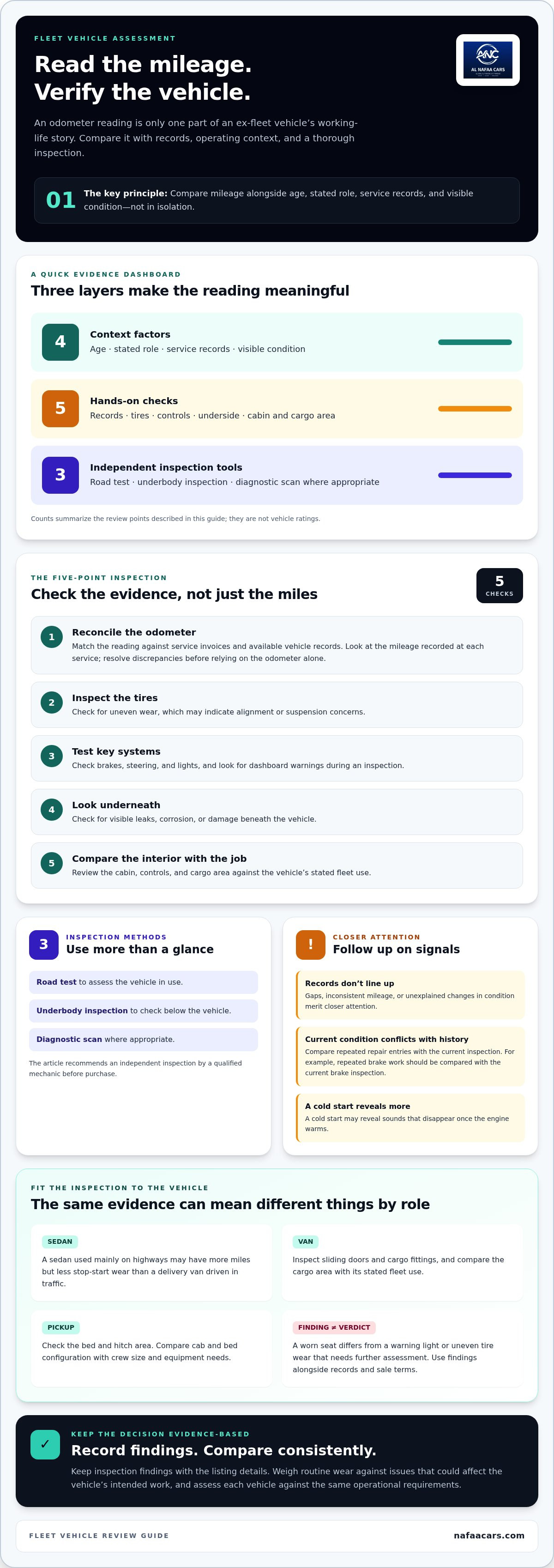
An odometer reading is useful, but it does not tell the whole story of an ex-fleet vehicle’s working life. A sedan used mainly on highways may have more miles but less stop-start wear than a delivery van driven in traffic. Consider mileage alongside the vehicle’s age, stated role, service records, and visible condition. That context makes comparisons more meaningful.
Maintenance records can show whether routine servicing and reported repairs were documented. Look for dated entries stating the work performed, parts replaced, and mileage at each service. For instance, compare oil-service entries with the odometer reading. Gaps, inconsistent mileage, or unexplained changes in condition merit closer attention.
Review the vehicle systematically before purchase:
- Match the odometer reading against service invoices and available vehicle records.
- Inspect tires for uneven wear, which may indicate alignment or suspension concerns.
- Check brakes, steering, lights, and dashboard warnings during an inspection.
- Look beneath the vehicle for visible leaks, corrosion, or damage.
- Compare the cabin, controls, and cargo area with the vehicle’s stated fleet use.
Before committing to an ex-fleet vehicle, arrange an independent inspection by a qualified mechanic. Ask for a road test, underbody inspection, and diagnostic scan where appropriate. A cold start may reveal sounds that disappear once the engine warms. On a van, inspect sliding doors and cargo fittings; on a pickup, check the bed and hitch area.
Use the inspection findings to distinguish routine wear from issues that could affect the vehicle’s intended work. A worn seat in a frequently used passenger vehicle is different from a warning light or uneven tire wear that needs further assessment. Record each finding and compare it with the maintenance history and sale terms. This keeps your decision grounded in evidence.
If service invoices show repeated brake work, for example, compare them with the current brake inspection. If the odometer reading conflicts with a maintenance record, resolve the discrepancy before relying on mileage alone. Keep the findings with the listing details so you can assess each vehicle against the same operational requirements.
Condition review is one part of fleet procurement planning. Use inspection results to define the vehicle requirements you prioritize when exploring vehicle procurement options.
Financing terms and estimated APR
Financing affects the timing and total cost of a vehicle purchase. Before deciding how the purchase fits your operating budget, compare the quoted annual percentage rate (APR), repayment schedule, deposit, and total amount payable.
APR expresses borrowing cost as an annual rate, while an interest rate may describe only the interest charged on the borrowed balance. Read the written offer to see which charges are included in the APR calculation. A lower stated interest rate may still come with different fees or terms, so compare the full disclosure rather than a single figure.
An estimated APR is indicative, not a final offer. A lender’s assessment may take into account the borrower’s credit profile, vehicle age and condition, amount financed, and repayment period. Financing a used work van, for example, may be assessed differently from financing a newer passenger vehicle. Compare offers using the same vehicle price and repayment assumptions.
Repayment length affects both regular payments and total interest. A longer term can lower each scheduled payment but extend the period in which interest accrues. A shorter term generally means a tighter repayment schedule. Review the amortization schedule to see how each payment is divided between principal and interest, and note any early repayment terms.
Before signing, assess the full purchase budget, not just the payment. Include the required deposit, listed financing charges, insurance, registration, fuel, and expected operating costs. For a pickup used at multiple sites, compare these expenses with its planned workload. Keep the vehicle’s sale terms separate from financing terms: the sale price and borrowing cost are different parts of the transaction.
Use this sequence to compare financing proposals:
- Record the APR, repayment period, deposit, and payment schedule for each offer.
- Compare the total amount payable, including disclosed fees.
- Review any conditions tied to the vehicle, borrower, or repayment method.
- Check whether the schedule fits the organization’s expected cash flow.
For a multi-vehicle fleet purchase, model each proposed payment against the organization’s budget cycle. Terms for one vehicle may not translate directly to a larger acquisition. Compare proposals using consistent assumptions, then assess the combined commitment alongside operating expenses and planned replacement needs.
Evaluate financing terms separately from vehicle condition and suitability. A competitive APR does not mean a vehicle matches the intended workload. Review financing alongside maintenance history and operational requirements before deciding to purchase.
Used fleet inventory
In the United States, GSA offers more than 30,000 fleet vehicles for public sale at auction each year. That figure describes annual public sales, not the number available at one time. Inventory changes from sale to sale, so treat each auction as a distinct selection rather than a permanent catalogue. Buyers searching for fleet vehicles for sale should compare the actual listings with their procurement requirements.
GSA offers a vehicle for public sale when it determines that the vehicle meets its replacement criteria. As a result, inventory reflects fleet replacement decisions, not a fixed age or mileage threshold. When comparing listings, assess each vehicle’s condition, records, configuration, and stated sale terms. These details are more useful than assuming all retired vehicles have the same history.
GSA leases non-tactical vehicles to other federal agencies in the United States. Vehicles that meet replacement criteria may be offered for public sale after serving those fleets, but not every retired federal vehicle appears in every auction. Selection depends on which vehicles are chosen for replacement and sale. Inventory of fleet vehicles for sale can therefore vary between auctions.
Plan around the specific listing. Note the vehicle’s location, configuration, and sale schedule, then compare its documentation and condition with your operational requirements. A work vehicle’s layout and equipment should suit its intended task. Even a listing in the right broad category may differ from what your operation needs.
Use a consistent review process for each candidate:
- Record the listing identifier and sale date for tracking.
- Compare the described configuration with your required use.
- Review available condition information and vehicle records.
- Note the sale terms, collection details, and deadlines.
- Rank candidates by operational fit, not inventory volume alone.
This process helps distinguish a suitable vehicle from one that only fits a broad category. If several vehicles meet your requirements, compare their documentation and condition individually. Auction inventory changes between sales, so assess each listing against the same operational criteria to keep comparisons consistent.
Public auction inventory is not a fixed procurement catalogue. Buyers compete for listed vehicles under the terms of each sale, and the selection can vary. Before bidding, review the auction details, including the purchase process and applicable fees. Do not assume that conditions from a previous listing apply to another sale.
For organizations planning replacement cycles, GSA’s annual public-sale volume provides market context, but does not guarantee that a particular vehicle type will be available. Define requirements by function, configuration, and condition, then assess the actual inventory in each sale to identify candidates for further evaluation.
Vehicle data and pricing disclaimers
A vehicle listing is a summary, not a complete condition report. Treat each field as a separate data point and compare it with the VIN, photographs, and sale terms. A model year identifies the vehicle’s model year, for example, not its maintenance history. An advertised price alone also does not show every transaction cost.
Start with the vehicle identification number (VIN). Use it to match the listing with title documents, inspection records, and other available vehicle records. Check that the make, model, model year, and configuration agree across those materials. If a listing describes a pickup but the photos show a different cab or bed, note the mismatch before comparing it with other vehicles.
Separate observable facts from seller descriptions. A photo may show visible body damage, but cannot establish engine condition. A statement such as “runs” describes a limited observation, not a full mechanical assessment. Treat odometer readings, equipment lists, and condition grades as reported information, then compare them with supporting records and a physical inspection.
Read pricing language carefully, too. Distinguish the stated price or current bid from the total amount due under the sale terms. Check whether the listing separates buyer charges, taxes, title processing, transportation, storage, or payment deadlines. Base your budget on charges shown in the applicable terms, not assumed amounts.
Build a comparison sheet with these fields:
- VIN, model year, make, and listed configuration.
- Odometer reading and the date attached to that reading.
- Condition notes, photographs, and inspection documentation.
- Stated price or bid, plus separately listed charges.
- Payment deadline, collection location, and removal conditions.
This approach makes differences visible. Two vans, for example, may have similar listed prices but different equipment, condition disclosures, or collection requirements. Compare the full terms rather than ranking listings by the headline figure. Keep a copy of each listing and its sale conditions so you can refer to the details behind your decision.
For a direct purchase, request a written quotation that clearly identifies the vehicle and the applicable commercial terms. Nafaa Cars provides personalized quotations for vehicle purchases, helping buyers assess vehicle requirements alongside the stated offer. Request a vehicle quotation when you are ready to define the specification and procurement scope.
Nafaa Cars: Premium vehicles
Nafaa Cars helps buyers assess premium, commercial, fleet, and pickup vehicles against operational requirements. Its vehicle trading process runs from enquiry to delivery, with personalised quotations to support procurement discussions. This is a practical next step when your needs go beyond reviewing an auction listing or you are sourcing vehicles for defined business requirements.
Prepare a concise brief covering the vehicle category, intended use, preferred configuration, and procurement scope. Clear requirements help focus the discussion on suitable vehicle options and the information needed to assess them. For fleet planning, distinguish the needs of individual vehicles from broader priorities such as passenger transport or worksite use.
Contact Nafaa Cars to discuss your vehicle requirements, or visit nafaacars.com.
Turn your vehicle requirements into a clear brief
Turn your operational priorities into a concise procurement brief. Identify the vehicle’s intended role, preferred configuration, expected workload, and any requirements for coordinating multiple units. When assessing fleet vehicles for sale, this brief keeps comparisons focused on business fit rather than isolated listing details.
Nafaa Cars offers premium, commercial, and fleet vehicles. Share the category and intended use that matter to your organization, along with the specifications you have established. A focused enquiry is a practical starting point for discussing vehicle options and the procurement process from enquiry to delivery.
Use the same priorities to guide internal reviews and align stakeholders before proceeding. Clear requirements make it easier to assess whether a vehicle can do the work it is intended for and keep the decision tied to your operational objectives.
Contact Nafaa Cars about fleet vehicles to discuss your requirements. A well-defined brief is a strong foundation for the next procurement decision.
Frequently Asked Questions
Are There Any Age or Licensing Requirements for Buyers?
Buyer eligibility is governed by the sale terms and applicable jurisdiction, not simply by a vehicle’s fleet status. In the United States, distinguish the right to purchase from the requirements for registering and driving the vehicle. A public auction may admit individual buyers, while a specific sale can impose its own participation conditions. Read those terms before bidding, and plan title transfer and registration for the state where the vehicle will be used.
What Are the Benefits of Fleet Vehicles?
Fleet vehicles can give buyers access to vehicles previously assigned to roles such as passenger transport, deliveries, or site operations. Their configurations may suit practical work, and available documentation can help buyers assess how they were used. A business replacing a delivery van, for example, can compare its cargo layout and suitability with the planned routes. The key benefit is fit for purpose, not a guarantee of lower ownership costs.
What Types of Fleet Vehicles Are Commonly for Sale?
Listings may include sedans, station wagons, sport utility vehicles, vans, pickups, buses, and trucks. Public fleet auctions may also feature ambulances, law enforcement vehicles, trailers, and other specialist equipment. Fuel options can include gasoline, diesel, alternative fuels, low-speed electric, and non-powered units. A municipal buyer seeking passenger capacity, for example, would assess a bus differently from a pickup intended to carry equipment.
Are Ex-Fleet Vehicles Reliable, and What Are Their Pros and Cons?
Reliability depends on the individual vehicle’s condition, use, and records, not its former fleet role alone. Documented servicing and consistent use can help buyers assess a vehicle, while frequent stop-start work or heavy loads may indicate greater wear. Ex-fleet vehicles can offer practical configurations and traceable records, but some may show intensive use or equipment wear. Compare condition with the intended workload before purchasing.
How Can I Check a Fleet Vehicle’s Maintenance and Accident History?
Match the vehicle identification number (VIN) across the listing, title documents, and maintenance records. Review dated service entries, odometer readings, repair invoices, and any available damage disclosures. Then compare the records with a physical inspection of the body panels, undercarriage, and cabin. Mismatched paint or uneven panel gaps, for example, may warrant a closer look at repair documentation. Keep your findings with the sale listing for easy comparison.
What Mileage and Age Should I Look for When Buying a Fleet Vehicle?
No single mileage or age establishes whether every fleet vehicle is suitable. Assess both in relation to the vehicle’s role, condition, and documented use. A high-mileage highway vehicle may have a different wear profile from a lower-mileage van used for frequent short trips. Compare service entries with the odometer and inspect wear on tires, seats, pedals, and controls. Choose a vehicle whose overall condition matches the work it must do.
Can Individuals Buy Fleet Vehicles, or Are Sales Limited to Businesses?
Individuals can buy vehicles offered through public fleet auctions, including GSA public sales in the United States. Sales are not automatically restricted to businesses because the vehicles previously served government or commercial fleets. Each auction’s participation and payment terms govern the purchase. Before bidding, review the buyer requirements and ensure the title and registration arrangements suit your intended use and state of residence.
What Financing, Warranty, and Return Options Are Available for Fleet Vehicles?
Financing, warranty coverage, and return rights depend on the seller and transaction terms. Auction sales and direct vehicle purchases may have different conditions, so review the written agreement for payment deadlines, stated warranty coverage, and return provisions. Nafaa Cars sells vehicles and offers no vehicle financing, rental, repair, or maintenance services. Evaluate any financing separately from the vehicle’s purchase terms.


